Search My Blogs

Showing posts with label The Big Pink. Show all posts

Friday, January 15, 2016

Numbers 150 - 126, "Kill All Hippies"

The plural of medium is media.

And the noughties have offered a proliferation of previously unimaginable channels for the production and distribution of music that have been tantamount to a revolution in the entire way music is communicated. And if music is little else than a vehicle for communication, then this is a revolution in the very essence of the medium.

What does it mean that anyone with an internet connection can stream almost at will practically ANY song from the ENTIRE body of human recorded history? And this is neither much of an exaggeration nor any real extrapolation. The Alan Lomax recordings are all on Spotify now.
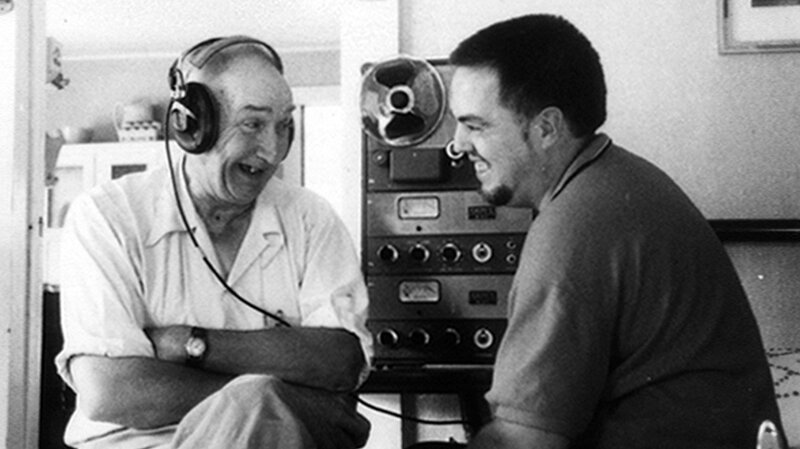
Alan Lomax (r) with Wade Ward, 1959-60
Does this mean that we are set to witness the death of recorded music as a physical object? A casual look at the sorts of prices collectible vinyl still goes for would suggest no. In fact the other real trend we saw in the noughties was the resurgence of vinyl as a fetishised object, wherein it has connotations of authenticity and of connoisseurship. Values that rock/pop ideology has always valorised in its heirarchies in contrasting the 'commercial' with the 'authentic'.

But as we'll see in the next installment, what the noughties have done is blur that boundary between commercial and authentic. Since the days when Biz Markie first 'yes y'all'-ed forth, hip hop music has had its aim squarely on destroying this dialectic. The accumulation of bling actually became your route to authenticity, not its opposite. And any casual look particularly at contemporary music video culture shows how quickly discourses from this arena have become pop culture stereotypes.

Five minutes on any given Video Hits channel trammels up a bewildering array of variously rehashed stereotypes that owe considerably more to cheerleading and other communal dance activities than they do to a popular music heritage that runs all the way back to the 1950s.

So here we are in the perpetual now, shorn of our history and all its context. Naked and unformed whiteboards waiting to be scribbled on and erased, where we have NO BASIS for attaching quaint, unitary, historicity to anything, where any value judgement is subjective - can never be definitive. By definition that can never be defined either.

It should really be no wonder that in this environment political music died a sorry death. And Neil Young, the already dead, is the only fellow in today's list who could conjure its true spirit. #146, below. Enjoy.

150.MotorbikeWooden ShjipsDos (2009)
149.Track Of The CatPramDark Island (2003)
148.This Is HardcorePulpHits (2006)
147.MonsterYou Say Party! We Say Die!Lose All Time (2007)
146.Flags Of FreedomNeil YoungLiving With War (2006)
145.Welcome to JamrockDamian MarleyReggae Mix (2004)
144.Dream OnChristian Falk Ft. RobynDream On (2008)
143.Playground LoveAirTalkie Walkie (Russian Edition W/Bonus) (2003)
142.Do You Want To-Franz Ferdinand(2005)
141.HaHTRKMarry Me Tonight (2009)
140.BonkersDizzee RascalTongue N' Cheek (2009)
139.Sing It BackMolokoThings To Make And Do (2000)
138.Smile Like You Mean ItThe KillersHot Fuss (2004)
137.Bottle BabyAugie MarchMoo, You Bloody Choir (2006)
136.DareGorillazDare (2005)
135.1 ThingAmerieP (2008)
134.Tear You ApartShe Wants RevengeShe Wants Revenge (2006)
133.Hard To ExplainThe StrokesIs This It? (2000)
132.Kill All HippiesPrimal ScreamXtrmntr (2000)
131.No One Does It Like YouDepartment Of EaglesIn Ear Park (2008)
130.Take Me OutFranz FerdinandFranz Ferdinand (2004)
129.Come Pick Me UpRyan AdamsHeartbreaker (2000)
128.Island In The SunWeezerThe Green Album (2001)
127.DominosThe Big PinkA Brief History Of Love (2009)
126.SpaceapeBurial Feat. The Space ApeBurial (2006)

Monday, January 11, 2016

Numbers 175 - 151, "I'll Believe in Anything"

What else made the noughties what it was? We've spoken briefly already about stylistic fragmentation in noughties music, about the lack of distinct new musical 'styles' the decade produced.

What is going on here? It's postmodernism's essence to plunder pre-existing styles and forms. It is drawn from a sense of being beyond the "end of history", human recorded history being large and established enough now to create a sense that all possible things have already happened, all possible genres and discourses have already established. There is nothing new or original left to say. The 12 notes in the Western musical register have already been combined in every possible way.

But this is a decade which proved all this something of a falsehood. The decade began with the planet agape in horror at the events of September 11, 2001. And if this wasn't a new form of history playing out before our box-fixed eyes, then the whole thing was just another live TV drama.


But if the event itself seemed to buck postmodernity, the manner in which it was experienced by a sizeable portion of the planet in real time video, was resolutely postmodern. And the nature of the attacks themselves again underscore this, in which the very acme of modernity's technological achievements are turned into weapons against modernity, against technological advancement, against human advancement altogether.

So, we are more integrated as a species than ever before. More so than ever we can now experience phenomena/media/disourses that take place in cultures, societies and geographies far removed from our own and create a simulacra effect of the same phenomena as though they were OUR lived experiences.

And the music market, even with the fragmentation new technology has brought, is more global than ever. It's very difficult to imagine a band like Tame Impala having the same opportunities to make it globally under the old industry distribution and marketing models.

Bands like The Birthday Party and The Go-Betweens in the 80s HAD to leave Australia to access the global music market. Today that would be a very unusual decision for a band to make.

There's a question here of what fragmentation actually means, particularly given that technology has enabled music's fragmentation in line with heightened individualisation. Social media, streaming services, torrents, YouTube, Rate Your Music, Tune-Up, Last.fm, these are all geared towards allowing people to seek out any song on demand and display their individual proclivities in public.

And consequently, we've seen this decade LESS dominated by the sorts of blockbuster acts like U2, and the acts that have emerged form a FAR less established critical hierarchy than any prior decade. Ask five people to name the top five artists of the decade and I'd wager you'd have a list of twenty five separate artists.

And every individual now has a new technology route to getting their music published and distributed wholly absent of any record company organisation, or indeed without a lot of the costs associated with older physical distribution models.

So we've seen a levelling of the playing field, a democratisation of access to the medium, at the same time as the profitability of the formal organisations like record companies has plummeted. It's difficult to be too pessimistic about this, but it does leave one wondering whether, in the absence of the historical "common spaces" where we used to experience music communally and similarly, whether music's social function is going to be impaired.

Because heirarchies provide a means for individuals to communally debate particular discourses with reference to a common starting language. So people with vastly different lived experiences of jazz can all still debate "the greatest jazz track ever".

What happens if and when we lose all sense of our common lived experiences? Can music still continue advancing as a form if every newly empowered individual is working in their own isolated universe?

Because look at what's happened to the Top Forty charts over the course of the decade. Slowly the charts have basically become a virtual proxy for the R&B/dance charts. And why? Where, in the pantheon of noughties experience, is the one place we all still go to hear music in a communal setting? It's the club.

So, club music is the only form capable of pitching to the undifferentiated entire larger music market, and becomes the universal musical language. And that's a problem. Because it's mostly awful, artless, self-aggrandising dross.

175.Lover's SpitBroken Social SceneYou Forgot It In People (2002)
174.Welcome, GhostsExplosions In The SkyAll Of A Sudden I Miss Everyone (2006)
173.Beautiful LifeGui BorattoChromophobia (2007)
172.Welfare BreadKing Khan & The ShrinesWhat Is?! (2007)
171.Requiem for Dying Mothers, Part 2Stars Of The LidThe Tired Sounds of Stars of the Lid (2004)
170.I'll Believe In AnythingWolf ParadeApologies To The Queen Mary (2005)
169.Paper DollLouis XIVThe Best Little Secrets Are Kept (2005)
168.All Different ThingsBark PsychosisIndependency (2007)
167.Fredericia
Do Make Say Think
Winter Hymn Country Hymn Secret Hymn (2003)
166.
The Man With The Red Face
Laurent GarnierUnreasonable Behaviour (2000)
165.VelvetThe Big PinkA Brief History Of Love (2009)
164.Tiny Cities Made Of AshesSun Kil MoonTiny Cities (2005)
163.SpongebobCoki
The Sound Of Dubstep Classics - Ministry Of Sound (2007)
162.MiuraMetro AreaMetro Area (2002)
161.Love TrinityLife Without BuildingsLove Trinity EP (2000)
160.ChicagoSufjan StevensIllinois (2005)
159.Tracking Treasure Down Featuring MollyGabriel and DresdenLegends 2005 (2005)
158.Grounds For DivorceWolf ParadeApologies To The Queen Mary (2004)
157.Small Town GirlGood ShoesThink Before You Speak [Bonus Tracks] (2007)
156.My Angel Rocks Back And ForthFour TetRounds (2003)
155.A-PunkVampire WeekendEP (2007)
154.IrreplaceableBeyoncéB' Day (2006)
153.Neverending Math EquationSun Kil MoonTiny Cities (2005)
152.Your Little Hoodrat FriendThe Hold SteadySeparation Sunday (2005)
151.ZenClipseWe Got It 4 Cheap, Vol. 2 (2005)